Tackling Difficult Conversations

Tackling Difficult Conversations
Every leader I know can point to a moment when they knew they needed to have a difficult conversation… and didn’t.
We wait.
We rationalize.
We hope it fixes itself.
It rarely does.
Whether you’re leading a company, organization, district, a department, a team, or a family, the ability to tackle difficult conversations directly and respectfully is one of the most important leadership skills you will ever develop. Organizations don’t drift toward health—they drift toward dysfunction. Difficult conversations are often the hinge point.
Why We Must Tackle Difficult Conversations
1. Because clarity is kindness.
Avoidance feels kind in the moment, but it often creates confusion, resentment, and mistrust. Clear expectations and honest feedback protect relationships more than silence ever will.
2. Because culture is shaped by what we tolerate.
In schools and organizations, what we ignore becomes the standard. If we allow unprofessional behavior, low effort, or negativity to go unchecked, we send a message—intended or not—that it’s acceptable.
3. Because growth requires feedback.
Most people want to do well. They cannot improve what they do not understand. A courageous conversation can unlock potential that might otherwise remain buried.
4. Because leadership demands it.
If you are in a leadership role, addressing hard issues isn’t optional—it’s part of the job. Avoidance doesn’t eliminate responsibility; it delays it and often makes it heavier later.
What Happens When We Don’t
When difficult conversations are avoided:
Small issues become big problems.
Frustration leaks out sideways—through sarcasm, gossip, or disengagement.
Trust erodes because people sense what’s not being said.
Performance declines.
Resentment grows.
In schools especially, unresolved adult issues almost always impact students. The cost of avoidance is rarely neutral.
Silence doesn’t preserve relationships—it strains them.
How to Tackle Difficult Conversations
Difficult conversations don’t have to be dramatic. They do need to be intentional.
Here is a simple framework:
1. Prepare Your Mindset
Before the conversation, ask yourself:
What outcome do I want?
What problem are we actually trying to solve?
Am I seeking to win—or to improve the situation?
Go in calm. Go in curious. Go in committed to clarity.
2. Use a Script
Scripts aren’t robotic—they’re guardrails. They help you stay focused when emotions are high. Here is a simple structure you can use:
Opening (Set the tone):
“I want to talk about something important because I value you and our work together.”
State the Observation (Facts, not accusations):
“I’ve noticed that the last three reports were submitted after the deadline.”
Share the Impact:
“When that happens, it delays the team’s ability to complete their part, and it creates frustration.”
Invite Perspective:
“Help me understand what’s going on from your side.”
Clarify Expectations:
“Moving forward, I need reports submitted by the agreed deadline. What support do you need to make that happen?”
Close with Commitment:
“I appreciate you talking this through. Let’s check in again next week.”
This structure keeps the conversation focused on behavior and impact—not character or assumptions.
3. Listen More Than You Speak
Once you’ve stated the issue, pause. Silence is not your enemy. Often, the most important information comes after you stop talking.
Listening doesn’t mean agreeing. It means understanding.
4. Stay on the Issue
Difficult conversations often drift:
“Well, last year…”
“What about when you…”
“Everyone else does it…”
Stay focused. Bring it back gently:
“Right now, let’s stay with this specific issue.”
5. Follow Up
Accountability without follow-up is just talk. Set a timeline. Revisit the expectations. Reinforce improvement. Address continued concerns.
Consistency builds credibility.
The Courage Multiplier
Here’s what I’ve seen over time:
The first difficult conversation is the hardest.
The second is easier.
Eventually, it becomes part of your leadership rhythm.
And something powerful happens—people begin to trust you more, not less. They know where they stand. They know you won’t let things fester. They know you care enough to address issues directly.
That builds strong teams.
A Final Thought
Most difficult conversations are not about conflict. They’re about alignment.
Alignment around standards.
Alignment around expectations.
Alignment around values.
If we are serious about continuous improvement—whether in classrooms, boardrooms, or living rooms—we must be willing to speak the hard truths with respect and clarity.
Avoidance feels easier today.
Courage creates better tomorrows.
The question isn’t whether difficult conversations will arise.
The question is whether we will lead them—or let them lead us.
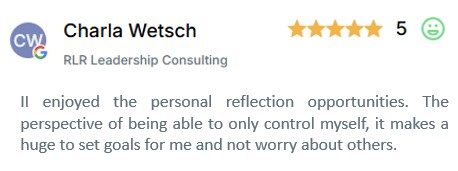
🙌Five-Star Support
We’re grateful for the incredible feedback from our community! Here’s one of the latest five-star reviews that reminds us why we do what we do.

Are you ready to develop or update your Strategic Plan for 2026-27?
Let RLR Leadership Consulting help you and your school/school district with your Strategic Planning and Goal Setting. We have the capacity to help one more district this year!
Our experts have helped dozens of schools, school districts, and businesses develop their Strategic Plans and Key Performance Indicators (KPI's) through our highly interactive and engaging process which includes all of your stakeholders.
One Superintendent shared, "When we engaged RLR for the strategic planning process, I had high expectations and they exceeded every one of them. Their facilitation was thoughtful, well-structured, and deeply focused on authentic community engagement. Randy and Erich really integrated themselves into our community, as they successfully brought together diverse voices from across our district, creating a shared vision which I believe reflects our students, families, staff and partners. The result was not only a strong strategic plan, but a renewed trust, clarity, and agreement on our path forward. I highly recommend their work to any district seeking a strategic planning partner which reflects your community."
Tobin Novasio, Hardin, MT SD Superintendent

Who's In Your Inner Circle?
RLR Leadership Consulting and The CORE Project
Think about the people closest to you. The ones you share ideas with, lean on for support, and let influence your decisions. That group—your inner circle—shapes how you see yourself, the choices you make, and even the risks you’re willing to take.
Sometimes, those relationships give you energy and push you forward. Other times, they hold you back. That’s why RLR Leadership Consulting and The CORE Project have teamed up to create Your Inner Circle—an opportunity to pause, reflect, and intentionally shape the connections that matter most.
In this experience, you’ll:
Identify who truly belongs in your circle
Learn how to set healthy boundaries when needed
Build trust that actually lasts
Choose connections that make you stronger
Because the truth is, leadership isn’t just about strategy or skills—it’s about people. And the people closest to you can either empower your growth or limit your potential.
We’d love for you to join us. As a special opportunity, use code Randy15 for a discounted price—but hurry, this offer won’t last long.
https://thecorepro.com/coregroups/p/your-inner-circle-curriculum
Your circle matters. Choose it wisely.
If you would like me, or someone from our RLR Team, to speak or work with your school and/or school district, please contact us at www.randyrussell.org.
Save the Date

Please join me for one of these upcoming events I'll be presenting at:
Inland NW AGC
Spokane, WA - April 30, 2026
The 3 Ships
Washington Association of School Business Officials State Conference
Tacoma, WA - May 13, 2026
Project Leadership
Sun Valley, ID - Nov/Dec, 2026
Partnership Spotlight
Thank you to The Core Project for partnering with RLR - we are honored to serve and support the great efforts of The Core Project!


Please join me on these Social Media platforms: